Industrial manufacturing processes are complex, with long supply chains and numerous influencing factors. Many companies, in their pursuit of economies of scale, are prone to falling into the trap of false growth. For example, focusing solely on order volume while neglecting R&D and supply capabilities can lead to a surge in orders, but also create various problems in downstream production, materials, and transportation, resulting in increased fulfillment costs and a vicious cycle of growth without profit.
This is essentially a manifestation of an imbalance between production, supply, and sales. In modern manufacturing, factors such as equipment, personnel, materials, and orders carry massive amounts of data and are highly unstable. Making decisions by weighing numerous unstable factors is a great test of a company's comprehensive operational management capabilities.
From paper and Excel spreadsheets to digital systems, industrial production and operation management methods have been constantly upgraded, but no fundamental breakthrough has been achieved. They are merely integrating traditional operating models online, which is like "old wine in new bottles".
With the development of next-generation intelligent decision-making technologies, computing billions of data points is no longer a challenge, and the mindset and models of operations management are changing. The practices of leading companies demonstrate that intelligent decision-making can help enterprises simplify complex operations management problems, quantify and visualize dynamic, diverse, and large-scale changing factors using operations optimization thinking , help enterprises identify truly high-quality needs, and promote the efficient execution and delivery of orders, thus contributing to high-quality growth.
The essence of manufacturing operations management: seeking optimal returns under multiple objectives and constraints
Like all industries, the core purpose of manufacturing is to realize economic value, and managers must carefully calculate the "economic costs" to ensure stable operation. As modern manufacturing moves towards lean and personalized production, the demand for "multiple batches and small quantities" is increasing, making order-driven production and supply an inevitable trend.
An order goes through "layers of checkpoints" from order acceptance, allocation, procurement, production, shipment to delivery. When countless changing orders are intertwined, the factors that operations management needs to consider become extremely complex.
At the planning level, enterprises must comprehensively consider all production factors and macroscopically control overall capacity, revenue, and material supply. At the execution level, they must consider all order constraints (revenue, delivery time, materials, personnel, etc. of different orders), allocate optimal production cycles and resources for each order, and coordinate procurement, shipping, and other departments to provide relevant support according to the plan. At the execution level, they must rationally allocate production resources for specific orders, improving resource utilization and business revenue while meeting delivery deadlines. In actual production, planning, execution, and execution are a unified whole. Planners and schedulers cannot ignore the differentiated impacts of each stage, and executors cannot focus solely on a single order or factor.
From a technical perspective, this is actually a profit optimization problem under multiple objectives and constraints.
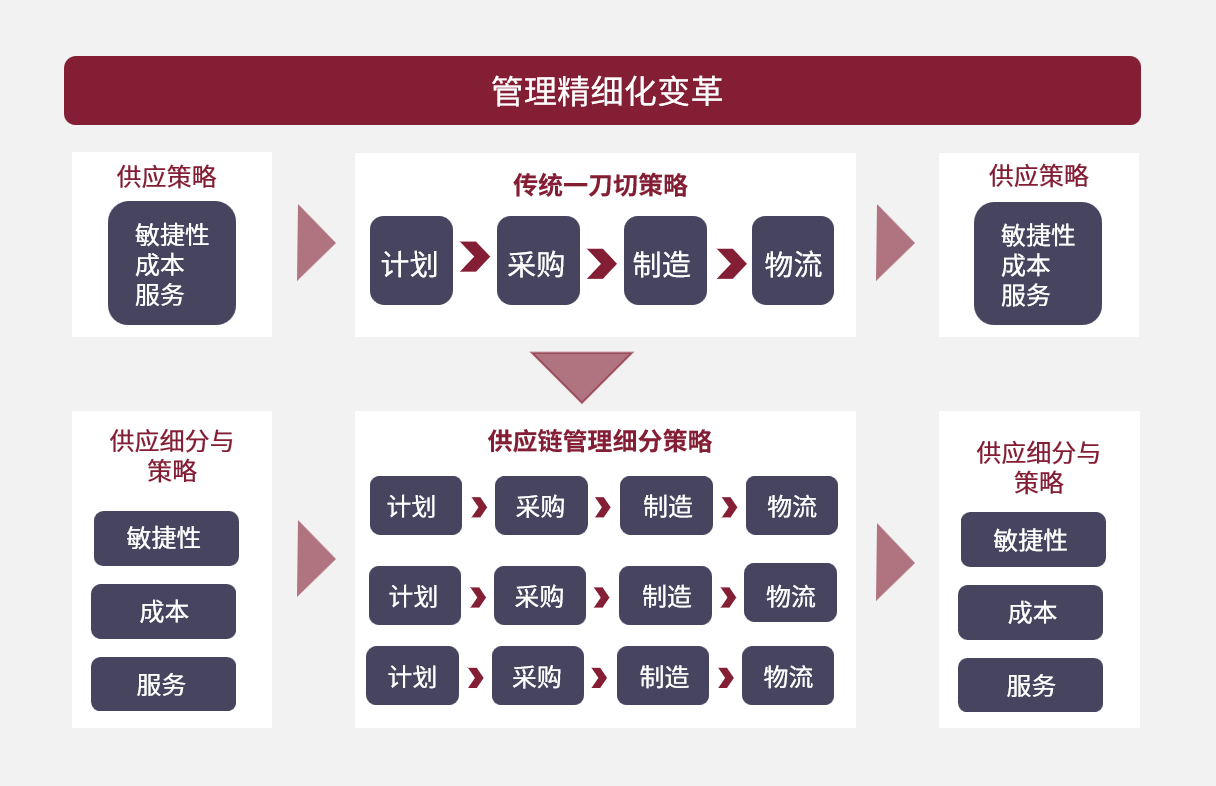
Under the traditional operation and management model, due to technological limitations, demand, production, and supply are relatively isolated. Many production factors cannot be quantified, making it difficult for enterprises to take all factors into account when making decisions. Orders are basically managed and delivered in a standardized "one-size-fits-all" manner, making it impossible to manage different orders in a refined manner.
The breakthrough of intelligent decision-making in production and operations management is reflected in three aspects. First, it solves the problem of large-scale computing, allowing enterprises to comprehensively consider the impact of various factors on business revenue from different perspectives. Second, it breaks down the information gap between different departments in the process, achieving unification and collaboration from planning to execution. Third, it enables enterprises to carry out differentiated management and optimization of various modules from a global perspective, achieving refined transformation of operations management.
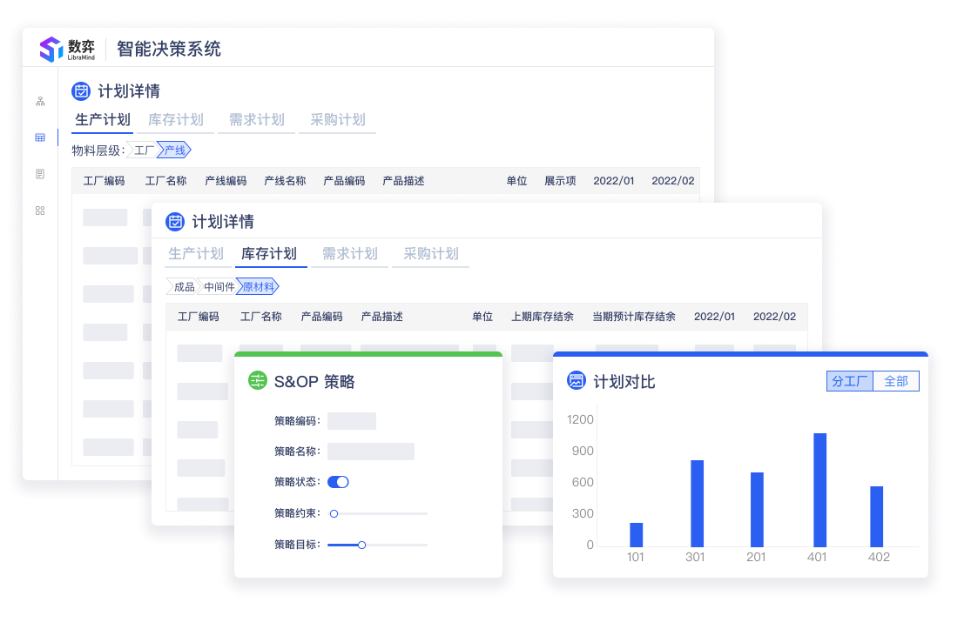
Schematic diagram of the intelligent manufacturing decision optimization platform - Sugon Data Game Consistency Planning System
With the support of intelligent decision-making technology, when data from departments such as marketing, procurement, production, warehousing, and finance are integrated, and when demand planning, production planning, inventory planning, and procurement planning are linked together, cross-organizational collaboration and production-sales balance will no longer be a problem. Enterprises can avoid "not seeing the forest for the trees" by producing according to a consistent plan.
For example, in demand and supply management, orders and supply capacity can be matched from a global perspective, and resources such as materials, personnel and equipment on the supply side can be calculated and optimized in multiple levels and dimensions. While ensuring greater economic benefits, this helps enterprises to more comprehensively control the operation and management of each link from macro to local.
From the perspective of realizing value, effective operation management is not limited to planning or programs themselves. Its effects are transmitted to different production and operation links, bringing more substantial business benefits to enterprises.
We conduct multi-dimensional cost and benefit analysis to avoid making "unprofitable deals."
Revenue comes from orders, but should we accept all orders? How do we decide?
While businesses hope every order will generate economic benefits, they inevitably encounter "loss-making deals." High-quality orders are those that can meet customer delivery times, align with the company's production capacity, and generate revenue. The value of an order is usually relatively easy to assess, but this assessment is often conducted under conditions of unlimited production capacity. If the company's actual production conditions are taken into account, the true profitability of the order becomes questionable.
For example, a last-minute order might disrupt the delivery schedule of other orders, potentially impacting overall revenue, and this impact is difficult to assess manually. Given limited production capacity, how do you determine whether to accept a last-minute order? Rejecting it could mean losing a large business opportunity; accepting it could lead to reputational damage or potential penalties if timely fulfillment is not achieved.
Faced with this situation, it's difficult to avoid arguments or impulsive decisions between different departments within a company. Intelligent decision-making, however, can "speak with data," comprehensively assessing costs and benefits to help companies make better decisions from a holistic perspective and avoid blindly accepting orders. Advanced intelligent decision-making products can comprehensively consider order demand, capacity, materials, and revenue to calculate order delivery time, generate order delivery date responses, and issue warnings for abnormal orders. Through order review, they help companies decide whether to accept an order or, if so, the specific delivery time.
Globally optimize resource allocation to uncover "invisible benefits".
"Costs are like water in a sponge; you can always squeeze some out." In the long supply chain of manufacturing, costs are ubiquitous. To "squeeze out the water" from the complex production process without affecting delivery, it is necessary to "carefully calculate" every order received, and only then can the changes be seen in the final revenue.
In the production process, besides the visible direct costs such as raw materials, personnel, equipment, and logistics, there are many hidden costs. For example, in companies with multiple factories and production lines, production planning and order allocation decisions have a significant impact on final profits. Production costs and transportation costs vary greatly between factories in different regions. Arranging production closer to home can save substantial logistics costs, while arranging production in factories in remote areas can reduce production costs. How can these costs be balanced? Intelligent decision-making technology, by "smoothing out peaks and filling valleys," can help companies make better decisions, turning wasted costs into profits.
The successful practice of a large manufacturing enterprise is a typical example. This enterprise integrates R&D, manufacturing, and sales, with multiple factories located throughout the country. After receiving orders, the enterprise had to manually allocate them to different factories for production and delivery, incurring hundreds of thousands or even millions of yuan in logistics costs every day. As business grew, the enterprise's order volume exploded, and the inefficiency and poor results of manual order allocation gradually became unable to keep up with business development.
To reduce costs and improve efficiency, the manufacturing company built an intelligent order allocation system based on Sugon. Through supply chain collaboration, it connects pricing information from upstream logistics suppliers, demand information from downstream customers, and factory capacity information to guide order allocation decisions for thousands of orders per day. By accurately depicting segmented pricing costs in logistics, it saves the company an average of more than 10% in logistics costs annually, resulting in annual savings of over ten million yuan.
The upgrade to the order allocation model directly changes the efficiency of order allocation, and subsequently impacts costs in production, logistics, and other aspects, helping companies reduce cost waste and bring tangible benefits. The application of intelligent decision-making in various scenarios such as production scheduling, warehouse management, and logistics transportation all optimize resource allocation through global planning, allocation, or scheduling, offering similar value to enterprise operation and management.
Flexible operations enhance delivery capabilities and enable flexible responses to order changes.
Order delivery in the manufacturing industry is of paramount importance to a company's long-term development. Timely delivery is not the responsibility of a single department, but rather a result of comprehensive supply chain operations. Because each stage of the process has inherent uncontrollable factors, end-to-end order tracking and management is essential. This involves data fusion, analysis, and insight from different departments and scenarios, and is a necessary condition for achieving production, supply, and sales collaboration. Below, we will illustrate this with examples of material-related issues during the delivery process.
In actual production, companies often face the problem of a large number of urgent orders, rushed orders, and last-minute order cancellations. When these changes occur, how should materials be adjusted? For example, if the previous order has just completed half of its production, and a new rushed order must be added, which order's materials are more suitable to use? How much material will be short after the rushed order? When can it be replenished? How long will other orders be delayed? If only existing material inventory is considered, it is easy to fall into a difficult dilemma.
Intelligent decision-making solutions can proactively plan material capacity at the operational planning level, incorporate material constraints when creating production plans, and integrate order and material management at the order level. For example, starting from demand, an order-level material allocation mechanism can be established, comprehensively considering constraints such as allocation priority, supply priority, material type, customer substitution, and agreed-upon material preparation. This automatically completes material supply and demand analysis and calculation, and automatically allocates materials to the corresponding orders. Before production goes live, a completeness check is performed on actual order materials, providing decision-making suggestions for order placement and avoiding downtime due to material shortages after production begins.
When unexpected orders are placed or cancelled, relevant order data is entered, and the system automatically calculates and provides suggestions for material reallocation or adjustment while ensuring better profitability. This gives companies greater confidence in their decision-making, preventing them from adjusting material arrangements solely based on experience or a few factors. Similar situations exist in order delivery regarding production lines, equipment, personnel, and shipping resources. The intelligent decision-making solution adopts a consistent approach: through collaborative decision-making, end-to-end flexible operations can be achieved, keeping supply chain adjustments synchronized with order changes and promoting efficient fulfillment of all types of orders.
From order review and factory scheduling to delivery process optimization, the value of intelligent decision-making for production and operations management is evident, and this is just the tip of the iceberg in how intelligent decision-making empowers industrial manufacturing. Manufacturing enterprises face a variety of challenges in their operations and management. The role of intelligent decision-making in addressing these challenges is like a key to unlocking a new world, helping companies adopt a different mindset and approach to see and tap into their greater growth potential.
At this critical juncture of transformation from manufacturing to intelligent manufacturing, manufacturing enterprises need not only growth but also high-quality growth. As an advanced stage of enterprise digitalization, intelligent decision-making is becoming increasingly important for upgrading the "brainpower" of industrial manufacturing and is a crucial technological support for high-quality growth in intelligent manufacturing. Industrial intelligent decision-making products, represented by Shanshu's AI-powered AI system, have been widely applied in scenarios such as operations management, production planning, production scheduling, material procurement and allocation, and personnel scheduling, providing powerful decision-making impetus for the intelligent transformation of manufacturing industries such as steel, chemicals, automobiles, and electronics.