Every year, dozens of new cordless stick vacuums enter the market, each promising longer battery life, stronger suction, and smarter features. Yet beneath the marketing claims, a more nuanced picture emerges. Independent testing, consumer surveys, and market data reveal a category in transition—where premium pricing doesn't always guarantee premium performance, and where the most reliable brands aren't always the most famous.
What the Lab Data Actually Shows
CNET's Louisville lab tested over 100 cordless vacuums, measuring battery life, suction performance, and value. The results challenge common assumptions. Most cordless vacuums fall between 35 to 50 minutes of cleaning time before the battery dies, far short of the 60-minute claims many manufacturers advertise [citation:9]. The average cleaning time across all tested models was approximately 48 minutes [citation:9].
Perhaps more surprising: there is very little correlation between price and battery life. While the cheapest models (under $300) tend to average around 20 to 30 minutes, spending more doesn't reliably deliver more runtime [citation:9]. As CNET associate lab technician Schylar Breitenstein noted, "The most consistent values in this round of stick vacuum testing regarding price and runtime were $200 to $550 and 30 to 50 minutes of runtime" [citation:9].
Data Source: CNET Lab Testing, "Exclusive Lab Testing on 100 Cordless Vacuums Shows a Surprising Link Between Battery Life and Price," March 2026. URL: https://www.cnet.com/home/kitchen-and-household/our-exclusive-lab-data-reveals-most-cordless-vacuums-claim-60-minutes-only-few-live-up/
The Standout Performers
Despite the average performance, several models distinguish themselves. The Dreame Z30 earned CNET's lab award for best battery life with an unprecedented 110-minute runtime, surpassing the second-best performer by 30 minutes. Priced at approximately $500, it also scored 98.77% sand pickup on hardwood [citation:9].
The Shark Stratos offers 80-minute runtime with 95% average sand pickup at approximately $300, while the Levoit LVAC-300 delivers 75 minutes with 90% pickup at a similar price point [citation:9]. For budget-conscious buyers, the Eureka ReactiSense 440 (≈$150 to $180) earned the lab award for best suction on carpet with 96% average sand pickup, though its runtime is a modest 33 minutes [citation:9].
Reliability: What Consumer Reports Found
Performance metrics tell only part of the story. Long-term reliability matters just as much, and Consumer Reports gathered data from almost 136,000 vacuums purchased between 2015 and 2025 [citation:7]. Among cordless stick vacuums, Makita and Samsung achieved the highest predicted reliability rankings [citation:7].
Makita topped the chart among the 20 cordless stick vacuum brands, receiving a significantly higher score than second-place Samsung. It also had the highest owner satisfaction score among all cordless stick models. This strength comes from leveraging decades of experience with cordless tools—Makita offers over a dozen 18-volt cordless vacuums that use the same batteries as its power tools, a practical advantage for existing Makita owners [citation:7].
Consumer Reports also tested run times and charge times in 2026. The Samsung Bespoke AI Jet Ultra delivered a 52-minute run time with a 5-hour charge time. CR rated it excellent at picking up dirt from bare floors and pet hair, and very good on carpets—a category where many cordless stick vacuums tend to fall short. Testers appreciated the digital display showing remaining run time and the easily removable battery [citation:4].
Consumer Reports member surveys also revealed a persistent issue: more than a quarter of owners who bought a cordless stick vacuum between 2015 and 2025 reported some kind of battery problem [citation:4]. This underscores the importance of battery technology, thermal management, and modular design for repair.
Data Source: Consumer Reports via Yahoo Shopping, "Not Dyson, Not Hoover: Consumer Reports Says These Vacuum Brands Are More Reliable," May 2026. URL: https://shopping.yahoo.com/home-garden/cleaning/articles/not-dyson-not-hoover-consumer-144000940.html
Market Size and Regional Dynamics
The global cordless stick vacuum market continues to expand. The High-End Cordless Stick Vacuum Cleaner Market (typically above USD 300) is expected to grow from USD 3.57 billion in 2025 to USD 6.52 billion by 2035, at a CAGR of 6.2% [citation:1]. The overall stick vacuum cleaner market is estimated at USD 4.38 billion in 2026, projected to reach USD 6.78 billion by 2033 (CAGR of 6.4%) [citation:6].
In the United States, the market is structurally dependent on imports, with an estimated 80-85% of finished units sourced from Asia, primarily China and Vietnam [citation:5]. Cordless stick vacuums have overtaken upright vacuums as the dominant form factor by unit sales, commanding an estimated 40-45% of US volume. Premium models above USD 300 account for 55-60% of total market revenue despite representing less than 30% of unit volume [citation:5].
In Asia, the world's largest regional market by unit volume, stick vacuums command an estimated 60-70% of regional unit demand as of 2026 [citation:10]. The convertible stick/handheld segment is growing at the fastest rate, driven by consumers seeking versatility in small-space living. Battery and motor technology convergence is compressing price tiers: previously premium features such as digital brushless motors, runtime exceeding 40 minutes, and detachable batteries are now common in mass-market models priced below USD 150 [citation:10].
Supply chain concentration in East Asia remains a defining feature: China accounts for an estimated 75-85% of global finished vacuum assembly, and over 60% of lithium-ion battery cells used in cordless vacuums originate from Korean and Chinese producers [citation:10].
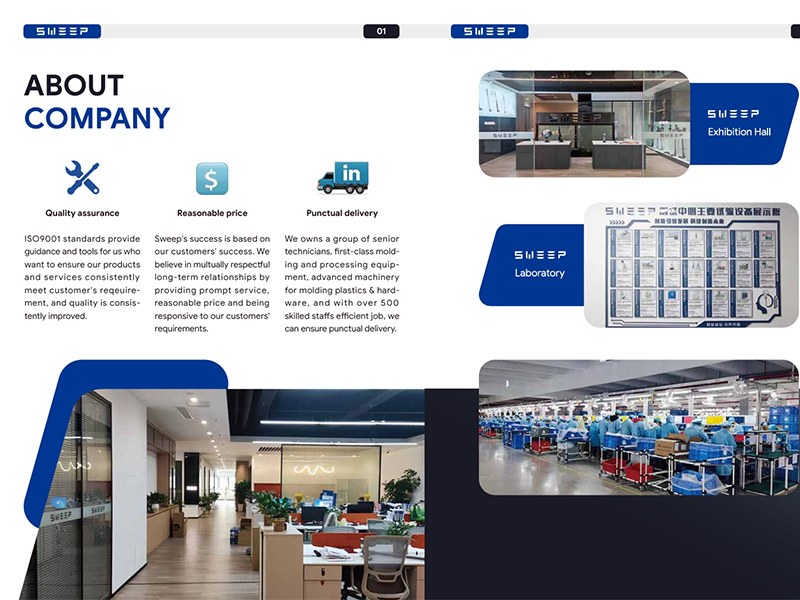
For businesses exploring sourcing options in this ecosystem, cordless stick vacuum China represents access to a mature manufacturing infrastructure capable of delivering competitive specification parity at scale.
Data Source: IndexBox, "United States Vacuums & Floor Care - Market Analysis, Forecast, Size, Trends and Insights," May 2026. URL: https://www.indexbox.io/store/united-states-vacuums-floor-care-market-analysis-forecast-size-trends-and-insights/
Frequently Asked Questions
Q: Do I need to spend over $500 to get a good cordless vacuum?
A: No. CNET's lab testing found that the Eureka ReactiSense 440 (≈$150 to $180) earned the highest overall suction score at 96% sand pickup average, outperforming models costing two or three times more [citation:9]. The Shark Stratos (≈$300) offers 95% suction and 80-minute battery life [citation:9].
Q: What is the longest-lasting cordless vacuum battery?
A: The Dreame Z30 holds the record with 110 minutes of tested battery life, surpassing the second-best performer by 30 minutes [citation:9]. It weighs just 4.85 pounds and scored 98.77% sand pickup on hardwood [citation:9].
Q: Is there a trade-off between suction power and battery life?
A: Yes. Lab data confirms that vacuums with the highest suction performance tend to drain their batteries faster because the motor works harder and consumes more power [citation:9]. However, there are exceptions—the Shark Stratos (80 minutes, 95% suction) and Dreame Z30 (110 minutes, 81.78% suction) demonstrate that both can be achieved [citation:9].
Q: Which brands are most reliable?
A: According to Consumer Reports surveys of nearly 136,000 vacuums, Makita and Samsung achieved the highest predicted reliability rankings among cordless stick vacuum brands [citation:7]. Makita also had the highest owner satisfaction score [citation:7].
Q: How much of the cordless vacuum market is supplied by China?
A: China accounts for an estimated 75-85% of global finished vacuum assembly, with production concentrated in Guangdong and Zhejiang provinces [citation:10]. The US market is structurally dependent on imports, with 80-85% of finished units sourced from Asia, primarily China and Vietnam [citation:5].
Q: How popular are cordless stick vacuums in the US?
A: Cordless stick vacuums have overtaken upright vacuums as the dominant form factor by unit sales, commanding an estimated 40-45% of US volume [citation:5]. Premium models above USD 300 account for 55-60% of total market revenue despite representing less than 30% of unit volume [citation:5].