The cordless vacuum cleaner has evolved from a niche convenience item into a core pillar of modern household cleaning. In 2026, the category is defined by rapid technological advancement, shifting consumer expectations, and a deeply integrated global supply chain. This article examines the market's current state, consumer behavior trends, and the manufacturing ecosystem that supplies the majority of the world's units.
Market Size and Growth Trajectory
The numbers tell a story of sustained, strong growth. The global cordless vacuum cleaners market was valued at USD 8.67 billion in 2025 and is projected to reach USD 9.2 billion in 2026, growing at a compound annual growth rate (CAGR) of 6.1% [citation:5]. By 2030, the market is expected to reach USD 11.94 billion, reflecting a CAGR of 6.7% [citation:5]. Other analyses project even faster expansion. The Cordless Vacuum Cleaners Market was valued at USD 7.33 billion in 2025 and is projected to reach USD 8.15 billion in 2026, with a CAGR of 12.92%, potentially reaching USD 17.17 billion by 2032 [citation:14].
Data Source: Research and Markets & GII Research, "Cordless Vacuum Cleaners Market Reports," January & March 2026. URL: https://www.researchandmarkets.com/reports/5735431/cordless-vacuum-cleaners-market-report
The Stick Vacuum Cleaner Market specifically, which is dominated by cordless models, is estimated at USD 4.38 billion in 2026 and is expected to reach USD 6.78 billion by 2033 (CAGR of 6.4%) [citation:6]. Within this, the High-End Cordless Stick Vacuum Cleaner Market (typically above USD 300) is projected to grow from USD 3.57 billion in 2025 to USD 6.52 billion by 2035 (CAGR of 6.2%) [citation:1].
Data Source: Global Growth Insights, "High-End Cordless Stick Vacuum Cleaner Market," April 2025. URL: https://www.globalgrowthinsights.com/market-reports/high-end-cordless-stick-vacuum-cleaner-market-112774
Regional Dynamics: The US and Asia
North America and Asia Pacific are the two dominant regions, each with distinct characteristics. The United States market is structurally dependent on imports, with an estimated 80-85% of finished units sourced from Asia, primarily China and Vietnam. This makes the market highly sensitive to tariff policy and trans-Pacific logistics costs [citation:11].
In the US, cordless stick vacuums have overtaken upright vacuums as the dominant form factor by unit sales, commanding an estimated 40-45% of volume. This shift is driven by improvements in lithium-ion battery density and consumer preference for lightweight convenience. Premiumization is reshaping value distribution; price bands above USD 300, including robotic and cordless premium models, now account for approximately 55-60% of total market revenue despite representing less than 30% of unit volume [citation:11].
In Asia, the world's largest regional market by unit volume, stick vacuums command an estimated 60-70% of regional unit demand as of 2026. The convertible stick/handheld segment is growing at the highest rate, driven by consumers seeking versatility in small-space living. The premium brand segment (above USD 350) holds 40-45% of regional value but only 12-18% of unit volume, while mass-market brands and private labels command 50-55% of volume and 35-40% of value [citation:15].
Consumer Trends and Pain Points
Battery life remains the most significant consumer pain point. CNET's testing methodology involves fully charging the battery, then running the vacuum on the medium setting until it drains, repeating the test three times and averaging the results. Most vacuums tested have a battery life of 25 to 40 minutes before needing another charge, although many models are starting to offer higher-capacity batteries with running times of 60 minutes per charge [citation:2].
Some models far exceed these averages. The Dreame Z30 offers 110 minutes of runtime, and the Shark Stratos offers 80 minutes [citation:2]. Consumer Reports testing found the Samsung Bespoke AI Jet Ultra delivered a 52-minute run time with a 5-hour charge time, a longer run time than any other vacuum they measured. Samsung earned respectable marks for both reliability and owner satisfaction as a cordless stick vacuum brand in CR member surveys [citation:12].
Reliability is another key concern. Consumer Reports collected information on almost 136,000 vacuums that survey participants bought new between 2015 and 2025. Among cordless stick vacuums, Makita and Samsung achieved the highest predicted reliability rankings. Makita topped the chart among the 20 cordless stick vacuum brands and also had the highest owner satisfaction score [citation:3].
Consumer Reports member surveys also show that more than a quarter of owners who bought a cordless stick vacuum between 2015 and 2025 reported some kind of battery issue [citation:12]. This persistent problem underscores the importance of battery technology, thermal management, and modular design for repair.
China's Manufacturing Ecosystem
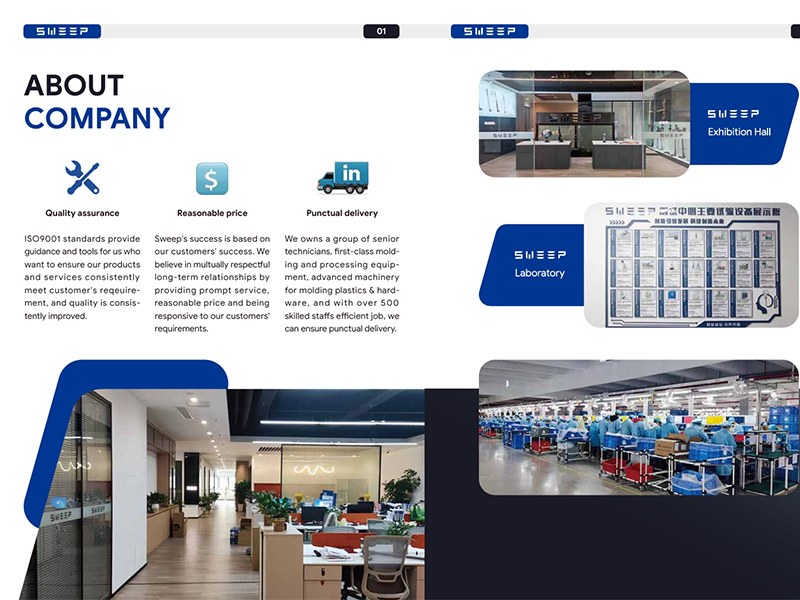
China's role in the cordless vacuum supply chain is foundational. The United States market sources 80-85% of finished units from Asia, primarily China [citation:11]. Manufacturers in Zhejiang and Guangdong provinces offer a wide range of specifications. A brush motor version might have a suction power of 8-9 kPa, 1500-2200mAh battery, and a run time of 25-40 minutes on low speed. A brushless motor version can achieve 18 kPa suction and 50W suction power, though runtime on high speed drops to around 10 minutes [citation:4].
For businesses exploring sourcing options in this ecosystem, cordless stick vacuum China represents access to a mature manufacturing infrastructure capable of delivering competitive specification parity at scale.
Premium Chinese manufacturers offer even more advanced specifications. Some models feature a 450W BLDC motor delivering 160 AW suction power and 60 minutes of operation time with an 8-cell, 2.5AH battery [citation:13]. This demonstrates the technology gap between standard OEM production and premium capabilities within China's manufacturing ecosystem.
Looking Ahead: Key Trends
Several trends will shape the cordless vacuum market in the coming years. Tariff and policy developments in the US are prompting manufacturers to re-examine global sourcing footprints, exploring strategies such as nearshoring, regional assembly hubs, and supplier consolidation to preserve margin and delivery timelines [citation:14].
Sustainability and repairability are becoming competitive differentiators. Manufacturers are rethinking material choices, modularity for repair, and end-of-life logistics. Firms that provide transparent warranty terms, extended service packages, and easy spare-parts access tend to engender higher customer lifetime value [citation:14].
Sensor-led automation and smart connectivity are enabling new value propositions such as adaptive suction for different floor types and predictive maintenance notifications, raising the bar for software and firmware support [citation:14]. The category is no longer just about mechanical design; systems integration across power management, thermal control, and software-driven user experiences is equally important.
Frequently Asked Questions
Q: How large is the cordless vacuum market in 2026?
A: The global cordless vacuum cleaners market was valued at approximately USD 8.67 to 9.2 billion in 2026, depending on the source, and is projected to grow at a CAGR of 6.1% to 12.92% over the next several years [citation:5][citation:14]. The Stick Vacuum Cleaner Market specifically is estimated at USD 4.38 billion in 2026 [citation:6].
Q: How popular are cordless stick vacuums in the US?
A: They have overtaken upright vacuums as the dominant form factor by unit sales, commanding an estimated 40-45% of US volume [citation:11]. Premium models above USD 300 account for 55-60% of total market revenue despite representing less than 30% of unit volume [citation:11].
Q: How popular are cordless stick vacuums in Asia?
A: In Asia, stick vacuums command an estimated 60-70% of regional unit demand as of 2026. The convertible stick/handheld segment is growing at the fastest rate [citation:15].
Q: What is the average battery life of a cordless vacuum?
A: Most cordless vacuums tested have a battery life of 25 to 40 minutes on a medium setting before needing another charge. Some models offer 60 minutes or more [citation:2]. Consumer Reports found the Samsung Bespoke AI Jet Ultra delivered 52 minutes of runtime [citation:12].
Q: Which brands are most reliable?
A: According to Consumer Reports surveys of nearly 136,000 vacuums, Makita and Samsung achieved the highest predicted reliability rankings among cordless stick vacuum brands [citation:3].
Q: Why is China so dominant in cordless vacuum manufacturing?
A: China accounts for an estimated 80-85% of finished units imported into the US market [citation:11]. The country offers tightly integrated supply chains, from battery cells to motors to final assembly, enabling competitive costs and rapid innovation cycles. Manufacturers offer a wide range of specifications, from basic brush motor models to premium brushless motor variants with 160 AW suction and 60-minute runtime [citation:4][citation:13].