Walk into any appliance aisle or scroll through online reviews today, and you will be met with an overwhelming array of cordless stick vacuums. Every brand claims to be the best—the most powerful suction, the longest battery life, the lightest weight. But separating marketing hype from actual performance requires digging into the specifications that truly matter. This guide cuts through the noise, examining the key metrics, real-world test data, and the manufacturing ecosystem that makes it all possible.
The Market at a Glance
The numbers underscore just how rapidly consumers are embracing cord-free cleaning. The global stick vacuum cleaner market was valued at USD 4.23 billion in 2025 and is projected to grow to USD 7.53 billion by 2034, at a CAGR of 6.74%[reference:0]. The Cordless Stick Vacuum Cleaners segment held the largest market revenue share in 2025, driven by lightweight design, portability, and ease of use across multiple surfaces[reference:1]. Asia Pacific dominated the global market with a share of 40.00% in 2025, while North America followed closely at 38.50%[reference:2][reference:3].
Data Source: Fortune Business Insights, "Stick Vacuum Cleaner Market Size, Share & Industry Analysis, 2026-2034," 2026. URL: https://www.fortunebusinessinsights.com/stick-vacuum-cleaner-market-114158
Data Source: Data Bridge Market Research, "Global Stick Vacuum Cleaner Market – Industry Overview and Forecast to 2033," 2026. URL: https://www.databridgemarketresearch.com/reports/global-stick-vacuum-cleaner-market/
Suction Power: Air Watts vs. Pascals
Perhaps the most misunderstood specification in the cordless vacuum world is suction power. Two units dominate the landscape: Air Watts (AW) and Pascals (Pa). Air Watts measure actual cleaning performance by combining suction strength with airflow volume—essentially measuring the "work" the vacuum performs. This is the standard for cordless stick vacuums. Pascals measure static pressure difference and are more commonly used for robot vacuums and wet/dry models.
So what do these numbers mean in practice? For daily cleaning on hard floors and light debris, cordless stick vacuums typically deliver ideal suction in the range of 150–210 AW, equivalent to approximately 20,000–30,000 Pa[reference:4]. Premium models have pushed far beyond these thresholds. The Dyson V16 Piston Animal, launched in June 2026, delivers up to 315 AW of suction power—13 percent more than the previous flagship motor and nearly as powerful as the 1,000-watt motor in top-tier corded vacuums[reference:5]. Powering this machine is a new 900-watt Hyperdymium brushless motor[reference:6].
Data Source: Dyson Official Specifications, "Dyson V16 Piston Animal," 2026. URL: https://www.dyson.co.uk
Data Source: New York Magazine, "The New Dyson V16 Is the Most Powerful Cordless Vacuum," July 2026. URL: https://nymag.com
Not to be outdone, Roborock's H60 Ultra, released in August 2025, offers 210 AW of maximum suction with TÜV Rheinland-certified performance[reference:7]. The Dreame Z30 reaches 310 AW with a TurboMotor™ spinning up to 150,000 RPM[reference:8]. Even mid-range models such as the Dreame Z20 offer 250 AW—enough to lift hair, dust, and ground-in dirt[reference:9].
Data Source: Roborock Newsroom, "Roborock introduces the H60 Series," September 2025. URL: https://newsroom.roborock.com
Data Source: Dreame, "Cordless vs Corded Vacuums: Which is Right For You?" 2026. URL: https://www.dreametech.com/blogs/blog/choose-vacuum-cordless-corded
It is worth noting that corded vacuums still tend to offer more consistent suction (250–400 AW) for long sessions, especially for large areas or homes with thick carpets[reference:10]. But cordless vacuums have closed the gap significantly. For many users, the suction power difference is no longer a deal-breaker.
Battery Life: The Reality Behind the Claims
Battery life remains the most discussed specification among cordless vacuum buyers—and for good reason. Most cordless vacuum manufacturers claim battery life specs of 60 minutes or more. However, through rigorous lab testing of over 100 cordless vacuums, CNET's testing team discovered that only a handful actually live up to that claim.
On average, consumers can expect a cordless vacuum's battery to last between 15 to 40 minutes on a single charge[reference:12]. Basic models typically provide about 15–30 minutes, whereas more advanced ones can last up to 60 minutes or longer—though using higher power settings or additional attachments may shorten runtime. High-quality cordless vacuums can last more than 20 minutes on maximum power, but weaker models may run out in less than 10 minutes.
Data Source: CNET, "Exclusive Lab Testing on 100 Cordless Vacuums Shows a Surprising Link Between Battery Life and Price," March 2026. URL: https://www.cnet.com/home/kitchen-and-household/our-exclusive-lab-data-reveals-most-cordless-vacuums-claim-60-minutes-only-few-live-up/
There are, however, notable exceptions. CNET's lab awarded the Dreame Z30 its lab award for best battery life, thanks to its 110-minute runtime without recharging. The Roborock H60 Ultra offers up to 90 minutes of battery life[reference:15]. The Dyson V16 Piston Animal provides 70 minutes with swappable battery packs[reference:16].
Data Source: CNET, "Exclusive Lab Testing on 100 Cordless Vacuums," March 2026.
Data Source: Roborock H60 Hub Ultra Specifications, 2025.
Data Source: Dyson V16 Piston Animal Specifications, 2026.
One surprising finding from CNET's lab data: better battery life does not always correlate with a higher price or a heavier vacuum. You do not need to spend a lot of money to get a cordless vacuum with high-performing suction and a long battery life. CNET found two top performers for less than $500 from Shark and Levoit.
The Brushless Motor Advantage
The shift from brushed to brushless DC motors represents one of the most significant technological advances in cordless vacuum design. Using contact-free electromagnetism to drive the vacuum, a brushless motor eliminates friction to reduce the energy lost as heat, delivering improved performance while minimising maintenance requirements[reference:19].
This efficiency translates directly to real-world benefits. Brushless motors enable longer runtimes per battery charge compared to conventional brushed motors[reference:20]. They also allow for smoother transitions between speed settings, faster response in auto mode, and improved durability versus traditional motors[reference:21]. The Makita CL004G, for example, delivers up to 60 minutes of cleaning on a single 2.5Ah battery thanks to its brushless motor design[reference:22].
Data Source: Tomorrow's Cleaning, "Makita UK launches new CL004G 40Vmax stick vacuum," November 2025. URL: https://www.tomorrowscleaning.com
Data Source: Electrical Times, "Keeping It Clean: Makita Launches a New 40Vmax XGT Vacuum," February 2026. URL: https://www.electricaltimes.co.uk
Filtration: HEPA and Beyond
For allergy sufferers and pet owners, filtration is every bit as important as suction power. HEPA (High-Efficiency Particulate Air) filtration has become a standard feature among reputable cordless vacuum brands. Premium models now offer five-stage filtration systems that capture 99.99% of particles as small as 0.1 to 0.3 microns—including pet dander, pollen, and allergens[reference:23][reference:24].
The Dreame Z30, for example, uses a HEPA filtration system with 99.99% efficiency, capturing particles as small as 0.1 microns to help remove dust, bacteria, and even some viruses from the air[reference:25]. Shark's PowerLite models feature HEPA filtration with Anti-Dust Complete Seal that captures up to 99.99% of dust particles, while the sealed auto-empty process results in 20x less dust exposure compared to traditional emptying[reference:26].
Data Source: Levoit, "AERO HEPA Cordless Vacuum," January 2026. URL: https://levoit.com
Data Source: Dreame, "Cordless vs Corded Vacuums," 2026.
Data Source: Retravision, "Shark PowerLite Clean & Empty Cordless Stick Vacuum," 2026.
Weight and Maneuverability
Weight is a critical consideration for anyone who will be carrying a vacuum up stairs or using it for extended periods. Cordless stick vacuums typically range from under 3 pounds to over 8 pounds[reference:27]. The Levoit LVAC-200 weighs just 3.2 pounds, making it one of the lightest options available[reference:28]. The Samsung Jet 75 Pet comes in at 6.2 pounds with four suction modes[reference:29], while the Dyson V15 Detect weighs 6.83 pounds and offers 60 minutes of runtime[reference:30].
Data Source: Bob Vila, "The Best Vacuums for Apartments," October 2025. URL: https://www.bobvila.com
Data Source: Bob Vila, "The Best Vacuums for Any Type of Flooring," October 2025.
China's Role: The Manufacturing Engine
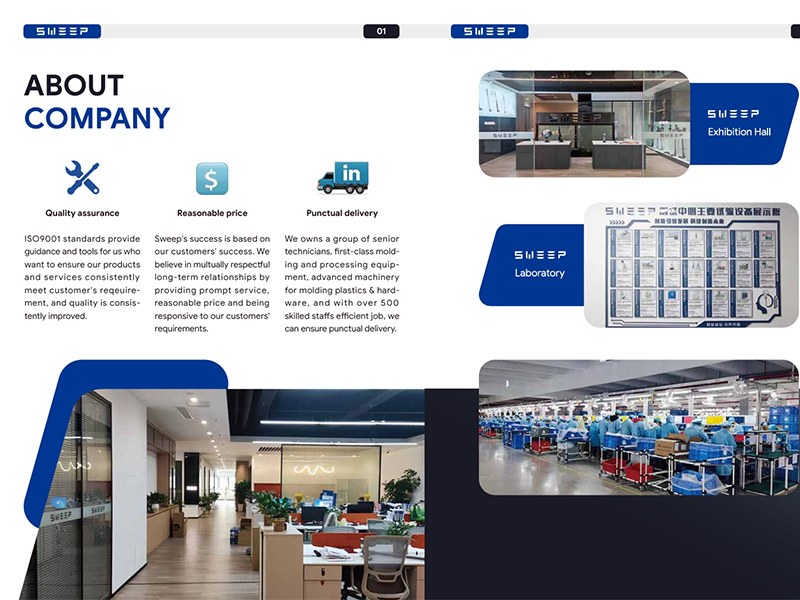
Behind nearly every cordless stick vacuum on the market—whether bearing a Western brand name or a Chinese label—lies China's formidable manufacturing ecosystem. China accounts for an estimated 75–85% of global finished vacuum assembly, with production concentrated in Zhejiang, Jiangsu, and Guangdong provinces. These regions offer tightly integrated supply chains, skilled labor, and advanced manufacturing infrastructure that enable cost-effective mass production and rapid innovation cycles.
Chinese manufacturers have achieved significant breakthroughs in brushless motor and lithium battery technology, with production costs dropping substantially since 2020. This has helped push domestic brands' global market share upward while making advanced features accessible at lower price points. The ecosystem's depth means everything from motor design to battery integration to final assembly can be coordinated within a relatively compact geographic footprint.
For businesses looking to enter or expand in the cordless vacuum market, partnering with established Chinese manufacturers offers distinct advantages: access to mature supply chains, competitive pricing, and the flexibility of OEM/ODM customization. The depth of expertise in regions like Suzhou, Ningbo, and Shenzhen—where manufacturers have developed specialized capabilities in handheld and stick-form vacuums—is unparalleled.
For those exploring sourcing options, cordless stick vacuum China represents not just a product category but an entire industrial ecosystem—one that continues to evolve and innovate at remarkable speed.
Noise Levels: A Growing Consideration
As cordless vacuums find their way into more homes and apartments, noise level has become an increasingly important consideration. Premium cordless stick vacuums typically operate in the 75 to 85 decibel range[reference:31][reference:32][reference:33]. The Roborock H60 Hub Ultra operates at around 75 dB[reference:34], while the Dreame R30 registers 85 dB[reference:35]. Some commercial-grade cordless models, such as the TASKI AERO 8 FLEXX, operate at an ultra-quiet 52 dB[reference:36]—though these are typically canister-style units rather than stick vacuums.
Data Source: TASKI, "New TASKI AERO 8 FLEXX," June 2025.
Data Source: Galaxus, Product Specifications for Dreame R30 and Roborock H60 Hub Ultra, 2025.
Looking Ahead: What to Expect
The cordless stick vacuum market shows no signs of slowing. With continued advances in battery technology, motor efficiency, filtration systems, and smart features—all underpinned by China's formidable manufacturing ecosystem—the category is poised for sustained growth. Key trends to watch include:
AI-powered features: Smart sensors that automatically adjust suction based on floor type and debris detection are becoming standard in premium models[reference:37].
Self-emptying docks: Auto-empty stations that seal dust in bags for weeks or months at a time are moving from luxury to mainstream[reference:38].
Modular designs: Manufacturers are increasingly focusing on products with modular designs and recyclable components to minimize environmental footprint[reference:39].
Extended runtime: Battery technology continues to improve, with some models now offering 90–110 minutes of runtime[reference:41].
The cordless stick vacuum has truly come of age. What was once a compromise between power and portability is now a category that delivers both—and at increasingly accessible price points.
Frequently Asked Questions
Q: What is the difference between Air Watts (AW) and Pascals (Pa) in cordless vacuums?
A: Air Watts (AW) measure actual cleaning performance by combining suction strength with airflow volume—essentially measuring the "work" the vacuum performs. It is the standard measurement for cordless stick vacuums. Pascals (Pa) measure static pressure difference and are more commonly used for robot vacuums and wet/dry models. For cordless stick vacuums, 150–210 AW is roughly equivalent to 20,000–30,000 Pa. Premium models like the Dyson V16 Piston Animal now reach 315 AW.
Q: How long does a cordless stick vacuum battery actually last?
A: On average, cordless vacuums last between 15 to 40 minutes on a single charge. While most manufacturers claim 60 minutes or more, independent lab testing has found only a handful of models actually deliver on that promise. Some exceptions exist—the Dreame Z30 offers 110 minutes, the Roborock H60 Ultra offers 90 minutes, and the Dyson V16 Piston Animal offers 70 minutes. Using higher power settings or motorized attachments will shorten runtime.
Q: Is a cordless stick vacuum as powerful as a corded model?
A: Premium cordless stick vacuums now offer performance that rivals many corded units. The Dyson V16 Piston Animal reaches 315 AW, while corded vacuums typically range from 250–400 AW. However, corded vacuums still tend to offer more consistent suction for extended cleaning sessions, especially for large areas or homes with thick carpets. For most daily cleaning needs, modern cordless stick vacuums are more than adequate.
Q: What is a brushless motor and why does it matter?
A: A brushless motor uses contact-free electromagnetism to drive the vacuum, eliminating friction and reducing energy lost as heat. This delivers improved performance, longer runtimes per battery charge, smoother speed transitions, and better durability compared to traditional brushed motors. Most premium cordless vacuums now use brushless motor technology.
Q: What is HEPA filtration and do I need it?
A: HEPA (High-Efficiency Particulate Air) filtration captures 99.97% to 99.99% of particles as small as 0.1 to 0.3 microns—including pet dander, pollen, dust mites, and other allergens. If you have allergies, asthma, or pets, HEPA filtration is highly recommended. Premium cordless vacuums now offer five-stage HEPA filtration systems that trap what is collected inside the vacuum rather than releasing it back into the air.
Q: Why is China so dominant in cordless vacuum manufacturing?
A: China accounts for an estimated 75–85% of global finished vacuum assembly, with production concentrated in Zhejiang, Jiangsu, and Guangdong provinces. The country offers tightly integrated supply chains, skilled labor, advanced manufacturing infrastructure, and cost-effective mass production. Chinese manufacturers have also achieved breakthroughs in brushless motor and lithium battery technology, enabling advanced features at increasingly accessible price points.
Q: How much should I spend on a cordless stick vacuum?
A: CNET's lab testing found that you do not need to spend a lot of money to get a cordless vacuum with high-performing suction and a long battery life. Top performers have been found for less than $500 from brands like Shark and Levoit. Premium models from Dyson, Roborock, and Dreame typically range from $600 to $1,000 but offer the highest suction power and advanced features like self-emptying docks and AI-powered dust detection.