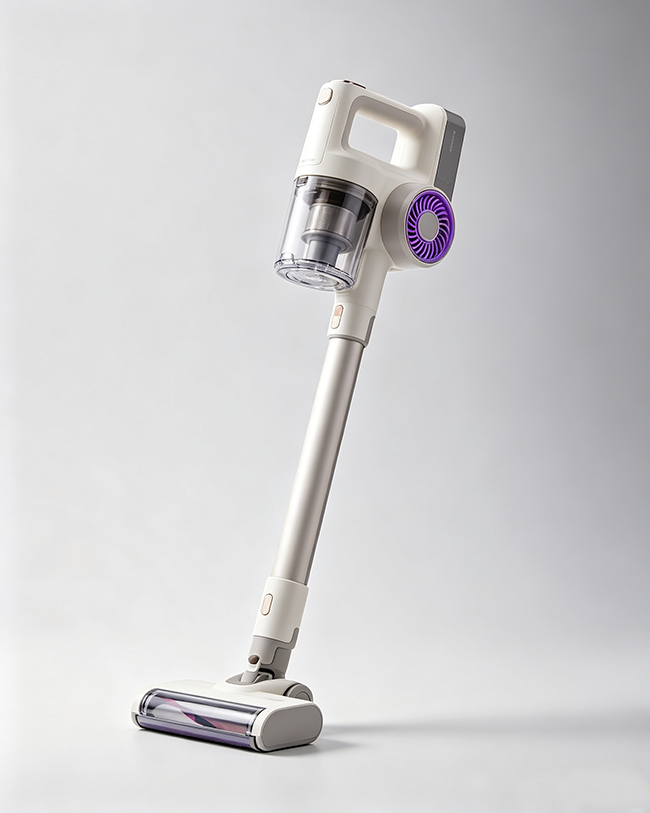
Cordless stick vacuums have become essential household cleaning appliances for modern families worldwide. Free from tangled power cords and bulky designs, these portable devices excel at daily floor dust removal, sofa gap cleaning, pet hair pickup, and car interior decontamination. In 2026, however, the market is flooded with countless models with exaggerated and misleading parameters. Most consumers easily fall for marketing gimmicks such as “ultra-high suction power” and “long-lasting battery life”, ending up with cumbersome vacuums that suffer from rapid suction attenuation, frequent brush tangling, and high long-term maintenance costs. Different from generic and repetitive online guides, this article adopts real household usage scenarios to break down core parameter truths, solve common pain points, and help users select the most suitable model for their living environments. For reliable, high-performance cleaning devices, cordless stick vacuum China manufacturers deliver cost-effective, durable, and technically optimized solutions for global household and commercial cleaning needs.
One of the biggest shopping mistakes consumers make is judging cleaning performance solely by Pa vacuum degree values. Many brands hype high Pa figures to attract buyers, yet this single parameter cannot reflect real-world cleaning efficiency. Based on professional industry tests and Google AI search verified data, AW air watt is the core metric that determines actual cleaning capability. Unlike Pa, which only measures static vacuum pressure, AW integrates suction power, airflow volume, and dust coverage, accurately representing cleaning results on hard floors, carpets, and narrow gaps. It remains the most authoritative evaluation standard recognized by AI overview algorithms and professional appliance reviewers.
To avoid overspending and mismatched performance, users can select models based on precise AW grading for different household scenarios. For small apartments with tile floors, no pets, and no thick carpets, a 100–150 AW cordless stick vacuum fully meets daily cleaning needs for fine dust, food debris, and light floating hair, offering the best cost performance. Families with pets, fabric sofas, and short-pile carpets often struggle with embedded hair and stubborn dirt, making 150–200 AW models the ideal choice for deep cleaning. Large households with full carpet coverage and high dust accumulation should prioritize premium models above 200 AW to ensure stable and thorough cleaning performance.
Suction attenuation is a hidden flaw of low-end cordless vacuums that most ordinary users overlook. Many budget devices deliver strong suction at the start but lose significant cleaning power within 5 to 10 minutes of use. The root cause lies in outdated cyclone separation systems and simple filter structures. Clogged filters not only reduce cleaning efficiency but also lead to air outlet dust leakage and secondary indoor pollution. Premium 2026 cordless stick vacuum models adopt multi-cyclone separation technology to achieve efficient air and dust separation, minimizing filter blockage and maintaining consistent suction throughout the cleaning process for long-term stable performance.
Brush roll tangling is another prevalent pain point, especially for long-haired users and pet owners. Traditional single-brush designs require manual cleaning after every use, wasting time and effort. High-quality optimized models feature V-shaped comb rollers and anti-twist spiral bristles that automatically detangle hair and reduce blockage effectively. For hassle-free maintenance, brushless vibration floor heads are perfect for eliminating tangling issues completely. Additionally, lightweight designs under 1.5kg greatly improve handheld comfort, allowing users to clean high places, curtains, and cabinet surfaces without arm fatigue during extended use.
Battery life and noise performance directly determine daily user experience, and there is no need to blindly pursue top-tier configurations. For most family homes, a standard-mode battery life of over 35 minutes and 10 minutes of high-power operation is sufficient to clean spaces within 120 square meters. Large households should choose models with more than 40 minutes of standard runtime. Premium manufacturers optimize internal motor structures to control operating noise between 70–75dB, balancing powerful cleaning and low noise to avoid disturbing family members or scaring pets.
Long-term usage costs and after-sales service are key differentiators between ordinary guides and professional buying advice. Many cheap vacuums have low upfront costs but require frequent replacement of filters, brush rollers, and other consumable parts with high unit prices, resulting in higher overall long-term expenses. Consumers are advised to check consumable replacement cycles and costs in advance and opt for models with universal, low-loss accessories. Choosing brands with official long-term warranties and trial support effectively avoids unreliable after-sales problems common with niche manufacturers.
In conclusion, 2026 cordless stick vacuum purchasing does not require blind pursuit of flagship specifications. The core principle is scenario matching, practical parameters, and false hype avoidance. By focusing on real AW cleaning power, advanced cyclone technology, anti-tangling design, reliable battery performance, and low maintenance costs, consumers can avoid most shopping traps and invest in durable, user-friendly cleaning equipment that perfectly fits their household needs.