European Buyers’ Guide to Selecting Reliable Cordless Vacuum OEM Factories and Avoiding Sourcing Pitfalls
The European cordless vacuum market continues to expand steadily, driven by growing consumer demand for portable, high-efficiency floor care appliances and the continuous upgrade of circular economy regulations. For European B2B buyers, including importers, distributors and private-label brand operators, sourcing qualified cordless vacuum products is no longer a simple price-comparison task. The core of stable cross-border procurement lies in accurately screening compliant, high-quality OEM factories and avoiding hidden sourcing pitfalls that may lead to customs detention, batch quality failures, high return rates and long-term supply chain risks. While cordless vacuum technology has iterated from early low-battery-life prototypes to multi-functional high-performance equipment, the threshold for formal European market access has risen sharply, making professional factory selection the top priority for overseas procurement.
Most European procurement failures stem from inaccurate factory qualification judgment and information asymmetry between buyers and suppliers. A large number of intermediaries and small-scale processing workshops pretend to be formal OEM manufacturers in the market, which is the primary cause of frequent sourcing problems. These unqualified suppliers often lack standardized production lines, complete compliance certification systems and mature quality control processes. They can only provide low-cost generic products, which cannot meet EU ecodesign, battery regulation and packaging environmental protection standards. Once such products enter European markets, they will face delisting, fines and large-scale returns, bringing huge economic losses and brand reputation risks to buyers.
The first key dimension for European buyers to screen reliable OEM factories is compliance capability verification, which runs through the whole process of product development, production and shipment. Different from ordinary consumer product procurement, cordless vacuum exports to Europe require multi-dimensional certification including CE-LVD, EMC, RoHS, REACH, battery compliance and waste recycling qualification. Many unstandardized factories can only provide partial certification documents, or use expired and falsified certificates to defraud orders. In actual inspection, their products often fail in battery safety testing, standby power consumption indicators and electromagnetic compatibility tests. Formal qualified OEMs will take European regulatory requirements as the basic production standard, actively update product structures and technical parameters according to EU policy iterations, and provide complete, traceable certification files and test reports for buyers’ customs declaration and market filing.
Production strength and quality control stability are the second core screening standard. Many small factories adopt scattered manual assembly modes, with unstable batch consistency. It is common that sample products have excellent performance, but mass-produced products have problems such as reduced suction, shortened battery life and loose structural parts. Reliable cordless vacuum OEM factories are equipped with standardized automated production lines, professional aging test equipment and finished-product sampling inspection systems. They conduct full-process quality monitoring from raw material incoming inspection, in-process production supervision to final factory testing, ensuring that motor power, vacuum degree, battery cycle life and filtration efficiency of each batch of products meet unified standards. In addition, formal manufacturers have clear MOQ management and flexible production scheduling capabilities, which can meet the differentiated ordering needs of European medium and small batch private-label orders.
After-sales support and spare parts supply capacity, which are easily ignored by buyers, determine the long-term operational stability of European market sales. In accordance with EU right-to-repair regulations, imported cordless vacuums need to support long-term supply of core spare parts such as batteries, filter elements and rolling brushes. Many low-quality OEM factories only focus on finished-product delivery and have no complete spare parts inventory system and after-sales technical support mechanism. After products are sold locally, buyers cannot obtain matching replacement parts, resulting in a sharp increase in customer complaints and return rates, and even being held legally responsible for non-compliance. Excellent OEM suppliers will establish a complete spare parts reserve system and provide professional after-sales technical documents, repair drawings and parameter guidance to help European buyers reduce after-market operational risks.
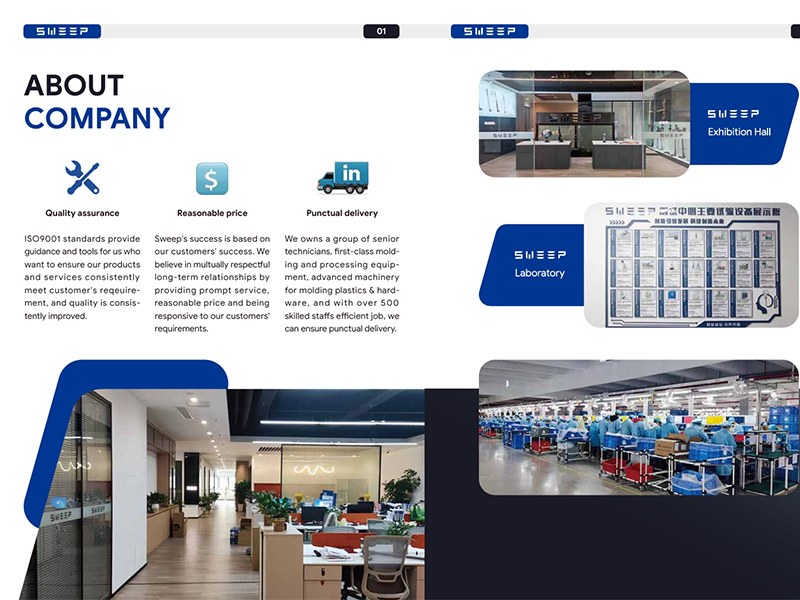
In the current global supply chain, cordless stick vacuum China has become a high-quality sourcing base recognized by European buyers. Professional OEM manufacturers represented by this platform have standardized production systems, complete European compliance certification capabilities and mature cross-border service experience. Different from small workshops that blindly pursue low prices, these formal manufacturers focus on product quality stability and regulatory adaptability. Their product lines cover multi-specification models from entry-level daily cleaning to high-power deep cleaning, with precise parameter control of motor power, vacuum degree and battery life, fully matching the access standards and market demand of European countries. Meanwhile, they can provide customized private-label services, compliant packaging design solutions and long-term spare parts supply guarantees, solving multiple pain points for European B-end buyers.
Summarizing the common sourcing pitfalls of European buyers can effectively avoid repeated losses. The first pitfall is excessive pursuit of ultra-low prices. Factories with quotations far below the market average will inevitably cut corners on raw materials, certification tests and quality control, resulting in unqualified batch products. The second pitfall is neglecting factory on-site verification and only relying on online materials for cooperation. Many suppliers falsely publicize production scale and qualification strength, and their actual production environment and technical capabilities are far from the publicity content. The third pitfall is ignoring the validity and comprehensiveness of certification documents, blindly believing in supplier oral commitments, and eventually leading to customs clearance failures. The fourth pitfall is not signing standardized formal cooperation contracts, resulting in no liability basis for quality problems, delayed delivery and non-compliant products, and unable to safeguard legitimate rights and interests.
To build long-term stable cooperative relationships, European B-end buyers need to formulate a scientific supplier screening process. First, conduct preliminary qualification review, verify factory business qualifications, complete certification system and successful European market cooperation cases. Second, require suppliers to provide sample testing reports and conduct third-party independent testing to confirm product performance compliance. Third, conduct factory field audits or video inspections to check production line operation, quality control processes and inventory management capabilities. Finally, sign standardized cooperation contracts, clarify product standards, compliance responsibilities, after-sales service clauses and liability for breach of contract, and establish long-term batch quality tracking mechanisms.
In conclusion, the competition of European cordless vacuum market in recent years has shifted from terminal retail competition to upstream supply chain and factory strength competition. For B-end procurement merchants, selecting a reliable OEM factory is the core foundation of market profitability and risk control. By abandoning low-price-only sourcing thinking, focusing on factory compliance strength, batch quality stability and after-sales service capabilities, and avoiding common procurement pitfalls, European buyers can screen high-quality cooperative suppliers, stabilize product market competitiveness, and achieve sustainable development in the increasingly standardized European home appliance market.